Tuesday, July 8, 2014

Louisiana Supreme Court Rules Against Seal of Confession
Bill Donohue (Catholic League for Religious and Civil Rights) comments on a ruling made by the Supreme Court of Louisiana:
In 2008, a fourteen-year-old girl alleges that she told her parish priest that she was being abused by a now-deceased lay member of their parish. The girl alleges the disclosures came during the Sacrament of Confession. Now her parents are suing the priest, and the Diocese of Baton Rouge, for failing to report the alleged abuse. The State’s Supreme Court has ruled that the priest, Fr. Jeff Bayhi, may be compelled to testify as to whether the Confessions took place, and if so, what the contents of any such Confessions were.
Confession is one of the most sacred rites in the Church. The Sacrament is based on a belief that the seal of the confessional is absolute and inviolable. A priest is never permitted to disclose the contents of any Confession, or even allowed to disclose that an individual did seek the Sacrament. A priest who violates that seal suffers automatic excommunication from the Church.
As a result of this ruling Fr. Bayhi may now have to choose between violating his sacred duty as a priest and being excommunicated from the Church, or refusing to testify and risk going to prison. The Diocese said Fr. Bayhi would not testify.
The First Amendment of the U.S. Constitution protects the free exercise of religion. Just as government cannot compel anyone to follow a particular religion, it likewise cannot prevent anyone from exercising the tenets of his faith. By deciding that Fr. Bayhi must choose between his faith and his freedom, the Louisiana Supreme Court has endangered the religious liberty of all Americans.
The Catholic League supports Fr. Bayhi and the Diocese of Baton Rouge in their quest for a reversal of this ruling, and a recognition that clergy cannot be forced to violate their faith.
See http://www.catholicleague.org/court-rules-seal-confession/ for more.
Wednesday, August 15, 2012
Have We Become Too "Soft"?
Have we Catholics become too "soft"? Here is something for us all to think about as we approach the Year of Faith.
From the UK’s best Catholic weekly, The Catholic Herald, comes this good reflection. It is on their regular site, but can be found in the print and online digital edition.
From the UK’s best Catholic weekly, The Catholic Herald, comes this good reflection. It is on their regular site, but can be found in the print and online digital edition.
The Church should make life harder for Catholics
by Michael Jennings
The Church in England is losing the fight against secularism. With the opponents of the Church gaining the upper hand we have to ask if Catholics are well- trained and strong enough to fight back. We are outnumbered and, at best, considered superstitious and irrelevant – at worst, a danger to society. In such circumstances there needs to be a stiffening of commitment if more and more of us are not to fall victim to the beguiling temptations of the secular world, where comfort and having a good time are necessarily important since there is no other life to look forward to. Perhaps we should employ St Paul as our personal trainer and model ourselves on him. He says he is intent on winning: “That is how I fight, not beating the air. I treat my body hard and make it obey me.” His message: toughen up, take up your cross daily and rejoice in sharing Christ’s sufferings.
Now, while Catholics in other parts of the world are suffering and dying for their faith, we in this country are permitted to abandon things that were easy for things easier still. The Eucharistic fast, for example, once began at midnight, then it was reduced to three hours. Now, in a Mass which goes much beyond the usual time, it would be possible to be munching sandwiches during the penitential act and still not break the fast. Fasting itself seems to be regarded as a gruesome medieval practice best replaced by good works, whereas it is a preparation for doing good works better.
More mollycoddling is in evidence with the recent transferring of various feast days to Sunday. This has saved Catholics a trip to church or otherwise having another thing to own up to in Confession – that’s if they happen to be part of the majority who don’t do Holy Days of Obligation. In my experience, within the confessional penances are mild. Without sending off penitents barefoot to Rome perhaps they should be beefed up just to emphasise that sinning is serious. Surely they should, on occasions, elicit a yelp or two.
And does not the Church go easy on our consciences? We live in society where most of us have a standard of living that is using up most of the world’s resources. It would not be possible for all the world’s inhabitants to enjoy the same facilities and luxuries as we do. Most of us own a car. Their production in such vast numbers is one of the most efficient means yet devised to use up irreplaceable resources and, as another built-in feature, create considerable pollution. You would think sin was lurking somewhere in this state of affairs.
We need to be tough enough to be told that we are sinful without being devastated by the news. No doubt there would be those who would storm off in a huff muttering: “This language is intolerable,” as they did when Christ said that eating his flesh and drinking his blood was the only way to obtain eternal life. He did not seek to assuage the hurt feelings of those heading for the exit by going soft on the message.
Yet another ease-making occurrence is the wholesale use of the vernacular in the Mass, even though this was not envisaged by Vatican II. At one level it made understanding easier but did it at the expense of a unifying language, a language that didn’t need updating every 10 years and which was special to the faith. And this matter of understanding can have insidious adverse consequences. The battle against secularism is not going to be won by hurling facts back at Richard Dawkins. Life is a mystery and perhaps we should dwell more on what we don’t know, rather than being proud of the little we do. After all, we can never know how much we don’t know.
Furthermore, English is our weekday language. It’s the one we use for swearing, arguing and lying. It might be a good idea to have Latin as our Sunday best. Then, when we came home after Mass, we might find those work-a-day words washed and ironed, all ready for the next week.
Another change which occurred after Vatican II was the practice of standing to receive Communion. This made things easier at the expense of profound symbolism – kneeling being a sign denoting weakness, submission and obedience. To quote St Paul again: “It is when I am weak then I am strong.” True, we stand as a sign of respect but standing on your own two feet and standing up for oneself are phrases to do with self-sufficiency. Surely when coming face to face with God, as one does at Communion, kneeling is the better response.
The point being made in all of this is that by removing difficulties the will is weakened and therefore the associated virtues, such as perseverance, bravery, restraint, patience and chastity. These virtues are vital armaments in the battle against secularism. Nowhere is strength of will more needed than in the field of sexual morality. It is not more knowledge so as to be in a position to make “informed choices” that will help. To hold fast to the teachings of the Church in this area it is strength of will which is needed. Restraint, patience and, often, bravery are the weapons to use.
If Catholics can’t go without food for a few hours, or go to church during the week once in a while, or get on their knees to receive Communion, then we are edging towards becoming indistinguishable from those who only have this world and each other to rely on. Christian life is not supposed to be a stroll in the park but the carrying of a cross, the climbing of a mountain. To the outsider, a Catholic’s iron commitment to the Mass, the strength to defer pleasure, the ability to suffer cheerfully and the courage to defend Church teaching are things which impress and are important factors in bringing about conversions.
The kind of dedication exhibited by the Olympic athletes certainly draws many others into that orbit and, as St Paul says: “Athletes exercise self-control in all things; they do it to receive a perishable wreath, but we an imperishable one.” In any case, the things being suggested here hardly amount to having to train day after day while the limbs scream for mercy. I_am not even suggesting the total prohibition of all cakes and ale. Still, as St Paul didn’t say (although he obviously knew it all too well), great journeys start with a single step.And what could those steps be? Any one of his suggestions would be a good start.
Michael Jennings is a former cartographer and teacher, now retired. He is married with two grown-up children. He became a Catholic in 1980 after dithering for 20 years.
- Stop Communion in the hand
- Kneel for Communion
- Reintroduce ad orientem worship
- Reintroduce Latin and Gregorian chant and polyphony
- Reintroduce male only service at the altar
- Reintroduce the 3 hour Eucharistic fast
- Fix down the timing of Holy Days of Obligation
- Stress the need for the Sacrament of Penance
- Stress the culture of the “Sunday Best” for Sunday Mass attendance
- Increase Exposition of the Blessed Sacrament and other traditional devotions
Thursday, December 15, 2011
The New Ark of the Covenant--Fourth Sunday of Advent

“Unless Yahweh builds the house, in vain do its builders toil over it”
(Psalm 127:1). This is an enduring warning to all who aspire to grand
projects–whether presidents or peace activists! Its radical wisdom
echoes through the familiar annunciation story of the fourth Sunday of Advent: God prepares to rebuild
the house of David (Luke 1:32f) by taking up residence in the womb of
the homeless woman Mary.

Saturday, December 10, 2011
The Collects of Advent--The Journey to Bethlehem Continues

Pour forth, we beseech you, O Lord, your grace into our hearts, that we, to whom the Incarnation of Christ your Son was made known by the message of an Angel, may by his Passion and Cross be brought to the glory of the Resurrection.
Third Sunday of Advent
O God, who see how your people faithfully await the feast of the Lord's Nativity, enable us, we pray, to attain the joys of so great a salvation and to celebrate them always with solemn worship and glad rejoicing.
Second Sunday of Advent
Almighty and merciful God, may no earthly undertaking hinder those who set out in haste to meet your Son, but may our learning of heavenly wisdom gain us admittance to his company.
First Sunday of Advent
Grant your faithful, we pray, almighty God, the resolve to run forth to meet your Christ with righteous deeds at his coming, so that, gathered at his right hand, they may be worthy to possess the heavenly Kingdom.
Friday, December 9, 2011
Wednesday, August 24, 2011
Zeal for Your House Consumes Me: On Hairy Knees and Bra Straps
How true is this?!!!
Zeal for Your House Consumes Me: On Hairy Knees and Bra Straps: I know this is the South. I know this is summer therefore the temperatures are analagous to those in the jungle. I know we've come through...
Zeal for Your House Consumes Me: On Hairy Knees and Bra Straps: I know this is the South. I know this is summer therefore the temperatures are analagous to those in the jungle. I know we've come through...
Friday, August 19, 2011
Liturgical Renewal as Envisioned by Vatican II
I want to highly recommend an article in the August-September 2011 issue of Inside the Vatican magazine. It was written by Justin Soutar and its full title is "Missale Romanum, Third Edition: Liturgical Renewal as Envisioned by Vatican II."
Mr. Soutar provides one of the best explanations that I have seen to date about the Missale Romanum that we will begin using the First Sunday of Advent this year. The entire article is well worth the read; however, here is one excerpt:
A truly wonderful article!
Justin Soutar is the Catholic author of forty-plus published articles on pro-life issues, the Pope & his message, American politics and elections, terrorism, the Middle East, and other topics in a wide variety of publications, both online and in print.
Mr. Soutar provides one of the best explanations that I have seen to date about the Missale Romanum that we will begin using the First Sunday of Advent this year. The entire article is well worth the read; however, here is one excerpt:
"In the last 45 years, the sweeping liturgical and other reforms of Vatican II have been generally misinterpreted as implying a radical change in the nature of the Mass and of the Church. Celebration of the liturgy in Latin, strict adherence to the prescribed rubrics, the concept of the Mass as sacrifice, and the dignity of the priesthood (in the case of the liturgy)--the Church as the Bride of Christ with infallible teaching authority, preserving and handing on the deposit of faith (in the case of the Church)--all of these have become old-fashioned, 'pre-Vatican II ideas, replaced with an 'anything goes' mentality in 'the spirit of Vatican II.' The Mass is no longer seen as the Church's worship offered to God but as a celebration of human togetherness subject to the whims of the local community. Similarly, Vatican II transformed the Church from a monarchy into a democracy, so it's now up to the individual Catholic to believe and live as he pleases, regardless of official Church doctrine and laws. This unfortunate heresy known as 'the spirit of Vatican II' has done catastrophic damage to the faith of millions of Catholics. It has even spawned an opposite myth adhered to by some traditionalist Catholics that the entire Second Vatican Council was heretical and its reforms null and void."Elsewhere in his article, Mr. Soutar reminds us, as Joseph Cardinal Ratzinger wrote in his book The Spirit of the Liturgy, "that we're supposed to worship God the way He wants to be worshiped, not the way we want to worship Him. This is because liturgy is not our work but our participation in God's work of redemption."
A truly wonderful article!
Justin Soutar is the Catholic author of forty-plus published articles on pro-life issues, the Pope & his message, American politics and elections, terrorism, the Middle East, and other topics in a wide variety of publications, both online and in print.
Thursday, August 18, 2011
Sunday, August 7, 2011
"What The World Needs Now Is..."

In his 1931 “social” encyclical Quadragesimo anno, Pope Pius XI wrote:
“Wherefore,” to use the words of Our Predecessor, “if human society is to be healed, only a return to Christian life and institutions will heal it.” For this alone can provide effective remedy for that excessive care for passing things that is the origin of all vices; and this alone can draw away men’s eyes, fascinated by and wholly fixed on the changing things of the world, and raise them toward Heaven. Who would deny that human society is in most urgent need of this cure now?
Minds of all, it is true, are affected almost solely by temporal upheavals, disasters, and calamities. But if we examine things critically with Christian eyes, as we should, what are all these compared with the loss of souls? Yet it is not rash by any means to say that the whole scheme of social and economic life is now such as to put in the way of vast numbers of mankind most serious obstacles which prevent them from caring for the one thing necessary; namely, their eternal salvation."
Friday, June 10, 2011
Why Praise and Worship Music May Be Praise, But Not Worship
While Father Christopher Smith "paints with a pretty broad brushstrokes" in his comments on The Chant Cafe blog about praise and worship music in the liturgy, his points are generally very well made and worth serious consideration.
Thursday, June 9, 2011
A Universe Brimming with Fruitful Spiritual Life: Reflecting Transcendence in the Liturgy

Bishop James D. Conley, auxiliary bishop of the Archdiocese of Denver, provides an exceptional reflection on the new translation of the Roman Missal which we begin using the First Sunday of Advent this year.
In an excerpt from his address at the Midwest Theological Forum, quoting Father Roman Guardini, Bishop Conley says: "...the liturgy aims to create a new world for believers to dwell in. A sanctified world where the dividing lines between the human and the divine are erased. Guardini’s vision is beautiful: 'The liturgy creates a universe brimming with fruitful spiritual life.' The new translation of the Mass restores this sense of the liturgy as transcendent and transformative The new translation reflects the reality that our worship here joins in the worship of heaven. And also from Pope Benedict XVI: 'The essential matter of all Eucharistic liturgy is its participation in the heavenly liturgy. It is from thence that it necessarily derives its unity, its catholicity, and its universality'.”
The entire article is well worth reading! Thank you, Bishop Conley!
Tuesday, June 7, 2011
Greeting Christ

Thursday, December 2, 2010
The Holy Father's "Reform of the Reform": An Excerpt from Cardinal Burke's Homily at Solemn Mass of Thanksgiving
Among other things, in his homily at the Solemn Mass of Thanksgiving on the Occasion of the Ordinary Public Consistory celebrated at the Pontifical North American College in Rome, Raymond Cardinal Burke had this to say about the Holy Father's "reform of the reform":
"I think also of the tireless work of our Holy Father to carry out a reform of the post-Conciliar liturgical reform[11], conforming the celebration of the Sacred Liturgy to the perennial teaching of the Church as it was presented anew at the Second Vatican Ecumenical Council, so that in every liturgical action we may see more clearly the action of Christ Himself who unites heaven and earth, even now, in preparation for His Final Coming, when He will inaugurate "news heaven and a new earth," when we will all celebrate the fullness of life and love in the liturgy in the heavenly Jerusalem. The Cardinal today is called, in a special way, to assist the Successor of Saint Peter, in handing on, in an unbroken organic line, what Christ Himself has given us in the Church, His Eucharistic Sacrifice, "the font and highest expression of the whole Christian life." The right order of Sacred Worship in the Church is the condition of the possibility of the right order of her teaching and the right order of her conduct."
Read the whole text here.
"I think also of the tireless work of our Holy Father to carry out a reform of the post-Conciliar liturgical reform[11], conforming the celebration of the Sacred Liturgy to the perennial teaching of the Church as it was presented anew at the Second Vatican Ecumenical Council, so that in every liturgical action we may see more clearly the action of Christ Himself who unites heaven and earth, even now, in preparation for His Final Coming, when He will inaugurate "news heaven and a new earth," when we will all celebrate the fullness of life and love in the liturgy in the heavenly Jerusalem. The Cardinal today is called, in a special way, to assist the Successor of Saint Peter, in handing on, in an unbroken organic line, what Christ Himself has given us in the Church, His Eucharistic Sacrifice, "the font and highest expression of the whole Christian life." The right order of Sacred Worship in the Church is the condition of the possibility of the right order of her teaching and the right order of her conduct."
Read the whole text here.
Season of Advent

The idea of Advent is "Prepare you for the coming of Christ." Therefore the very appeals of the Patriarchs and Prophets are put in our mouths in Advent. Prepare for the coming of Christ the Redeemer, Who comes to prepare us for His second coming as Judge.
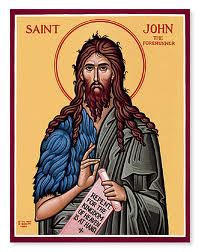
When the oracles of the Prophets were fulfilled and the Jews awaited the Messiah, John the Baptist left the desert and came to the vicinity of the Jordan, bringing a baptism of penance to prepare souls for the coming of Christ. The world took him to be the Messiah, but he replied with the words of Isaiah: "I am the voice of one crying in the wilderness: prepare ye the way of the Lord."
During Advent we make straight for Christ the way to our souls--and behold, our Lord will come at Christmas.
Wednesday, October 6, 2010
Does the Mass differ in any way from the Sacrifice of the Cross?

1.) EXTERNALLY
We have seen that on the Cross, Christ expressed inner adoration toward His Father, by loving Him more than the thing most precious to Him--His own life. We find the same interior adoration in the Mass, since Christ's preferential love for His Father persists eternally.
The difference appears in the outward expression of Christ's inner sentiments. On the Cross, Christ manifests His love for His Father by His death in a bloody manner. In the Mass, Christ offers Himself to His Father in a non-bloody manner.
What sign, then, in the Mass gives outward expression to Christ's inner adoration? For the Mass, like the Sacraments, has a visible sign that signifies and actualizes the Sacrifice. This sign is the separate Consecration of the bread and wine, representing the separation of our Lord's body and blood on the Cross. The active Consecration--that is, not yet accomplished, but in process of accomplishment--effectively signifies Christ's Sacrifice; since it renders present on the altar the same Sacrifice as that of Calvary.
Note that the Real Presence of Christ in the tabernacle is not, properly speaking, a sacrifice; since the exterior sign--the Consecration--is lacking. Where the exterior element is lacking, there can be no sacrifice.
2.) BY THE MODE OF OFFERING
Two things are needed to make a sacrifice: (a) Renunciation or immolation; (b) preference, choice, oblation or offering.
Now on the Cross, as in the Mass, it is the same Victim that is immolated--our Lord. A difference exists, however, in the method or mode of oblation. In the Mass, it is still our Lord who offers Himself as He did on Calvary, but through the ministry of His priests.
Nevertheless, the priest is merely Christ's representative. There is only one priest--Jesus Christ. But our blessed Lord, in His great mercy, and in order to make us participate still more intimately in His Sacrifice, has self-imposed the condition whereby He cannot offer Himself on the altar without His priests. Thus, on the Cross, Christ offers Himself by Himself in our name. In the Mass, it is the priest who, in the name of all the people, offers Christ exteriorly. For interiorly, it is always Christ who offers.
3.) AS TO TIME AND PLACE
The Sacrifice of the Cross occurred at a given moment in a given spot on the earth. Christ offered His death in the present. In the Mass, Christ offers Himself throughout the whole universe, exactly as the prophet Malachi had prophesied, and at each moment of the day and night. He offers His death as an accomplished historical fact.
Friday, October 1, 2010
The Holy Guardian Angels

Tomorrow, October 2, is the Feast of The Holy Guardian Angels. God's love for us was not satisfied with giving us His Son, Jesus, for our Redeemer and Mary for our Advocate; He has been pleased to give us also His Angels to be our guardians: "He hath given His Angels charge over thee to keep thee in all thy ways" (Ps 90:2). These holy spirits and princes of heaven are always present with us, and assist us in all our actions. And on this account, out of regard to our guardian Angels, we ought carefully to refrain from every action which can displease them.
"O God, Who in Thine ineffable Providence hast deigned to send Thy holy Angels to keep watch over us: grant to us Thy suppliant people, that we may always be defended by their protection, and may rejoice in their fellowship for ever" (Oratio, Memorial of the Holy Guardian Angels, October 2).
Wednesday, September 29, 2010
In What Does Christ's Sacrifice Consist?

1.) Our Lord's Sacrifice consists in His complete self-renunciation--an immolation that began with the first instant of His earthly existence and terminated on Calvary's Cross.
2.) Our Lord's Sacrifice consists above all in the preferring of God's will to His own: a preference shown by His oblation, which persists eternally. This perfect love of Christ for His Father was stabilized by His death and will abide throughout eternity.
Death fixes us in the dispositions we have at the moment of dying. Our degree of charity at death will mark our degree of glory for eternity. The set of our hearts at death remains as the final disposition of our wills. Our Lord, at the moment of His death on the Cross, attained (so to speak) the climax of His love for His Father. And it is precisely these sublime dispositions of our Lord toward His Father at the moment of His death that are made actual in the Mass. Now do you see why the Mass is of such great value?
Is the Mass the same as Christ's Sacrifice on the Cross, or is it a different Sacrifice? It is the same Sacrifice. Christ offered Himself once for all. "...[We] are sanctified by the oblation of the Body of Jesus Christ once" (Heb 10:10).
To understand this, we have only to go back to the concept of oblation, renunciation, and choice. The renunciation is summarized by Christ's death accepted once and for all. On Calvary, this act of renunciation was made once, and it passed.
But above all, our Lord's Sacrifice consists in this constant desire for His Father's will in preference to His own; and this preference remains eternally fixed in heaven. Suffering passes--the fact of having suffered remains.
It is the same thing for us when we renounce anything. The act of self-denial is, like all acts, temporary; but the disposition of the will to deny itself for a greater good remains just so long as we do not take it back. Death fixes us forever in the dispositions in which it finds us. Christ's Sacrifice persists in heaven, because the legacy of His life made on the Cross has never been cancelled. That which He gave was given for all time....Christ's immolation is eternal. St. John, in his vision of heaven, sees Jesus as "a Lamb standing upright, yet slain (as I thought) in sacrifice" (Rev 5:6).
This is understandable. The purpose of our Lord's Sacrifice having been to glorify God, the act whereby He glorifies Him must, of necessity, be eternal.
When the priest brings Christ down upon the altar, he renders Him present such as He is in heaven; and He is in heaven with the same loving dispositions that He had on Calvary at the moment of His death.
The Mass is, therefore, not a new Sacrifice by Christ; but the same Sacrifice actualized in the present. "We know that Christ rising again from the dead, dieth no more" (Rom 6:9).
The Mass is thus the perpetual prolongation of the Sacrifice made on the Cross. Consequently, every Mass is the one immolation of Christ repeated in the Act of Oblation. By the same act of the will, Jesus offers at the Last Supper His death in the future; on Calvary His death in the present; in heaven and on the altar His death in the past.
This special presence of Christ on the altar is peculiar to the Mass and demonstrates its grandeur.
When we celebrate the other mysteries of Christ's life, we merely commemorate them. There is no real renewal of the mystery on the day devoted to it. At Christmas, the Church recalls to our minds the Savior's birth, but this birth does not really take place--is not actualized in the present. On Ascension Thursday, our Lord does not renew His ascent into heaven. It is quite otherwise for the Mass. It is no simple symbolic representation, for the same Sacrifice that Christ accomplished on the cross is made truly present in an unbloody manner on the altar.
Wednesday, September 22, 2010
Offering Christ to the Father

We have seen that Christ is the center of religion and the universe. The creation, over which Christ reigns, is willed by God for His glory. We are beings created solely for the praise and the glory of God.
How can such a frail creature as man offer acceptable praise to the Blessed Trinity? In this way. The Word of God was incarnated, became one of us, and to each one of us gave something of Himself in such a way that we are enabled through Him, with Him, and in Him, to fulfill our religious duties toward God, duties that may be summarized in two acts, as follows:
- Our continual offering of Jesus Christ to God the Father.
- Our offering of ourselves with Him and like Him in complete self-surrender and self-sacrifice, so as to become one with Jesus Christ.
For Christ alone can glorify God as He deserves. Christ, equal to the Father by His Godhead, lowered Himself to our level by the Incarnation. As man, Christ is able to bow before God and render Him true adoration in humility, submission, and obedience. As God, Christ offers His Father homage of infinite worth.
It is the Incarnation that empowers us to offer God to God in the Person of Jesus Christ. Hence the grandeur and incomparable superiority of the Mass over all other acts of religion.
Why so many Masses? In order that the thought of offering Him up to God the Father may be continually present to our minds, Christ has willed to re-present the offering up of His Sacrifice.
But the Christ who thus offers Himself in the Mass is not just "Jesus, the Son of Mary," but the total Christ--Christ complete, entire. That is, all the members of the Mystical Body offer themselves with Christ, their Head. Hence, the active role we should play in the Mass.
Pope Pius XII recalled this truth in his encyclical on the Mystical Body (Mystici Corporis): "In it, the priest not only represents our Savior, but the entire Mystical Body; and each of the faithful in particular. The faithful themselves, moreover, united to the priest in a common will and prayer, offer up to the Eternal Father the Immaculate Lamb brought down on the altar by the voice of the priest. They offer Him, by the hands of the same priest, as a most pleasing Victim of propitiation and praise, for the necessities of the whole Church. And just as the Divine Redeemer, dying on the Cross, offered Himself as Head of the human race, to the Eternal Father; in the same way, in this 'clean oblation,' He not only offers Himself as Head of the Church to the Heavenly Father, but in Himself He also offers His mystical members; since all--even the most infirm and feeble--are contained in His loving heart."
Subscribe to:
Posts (Atom)